

Precision Imaging Without Radiation
Magnetic Resonance Imaging (MRI) is a detailed imaging procedure that uses a strong magnetic field and radio waves to view the internal structures and organs within the human body. An MRI is a painless imaging procedure that provides intricately detailed images for diagnostic evaluation and assessment without the use of ionizing radiation. With its high resolution and versatility, MRI has become an indispensable tool in modern medicine for accurate diagnosis and treatment planning.
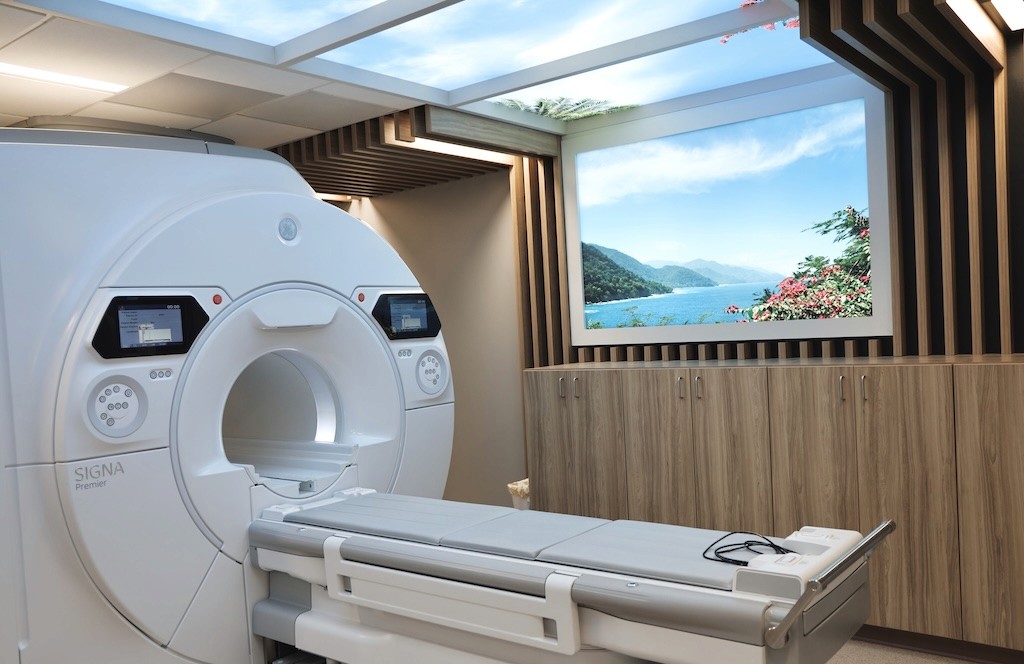
What to Expect
01
Check In & Change
Arrive 15 minutes early to complete a safety screening and change into a gown or scrubs. Remove jewelry, watches, and other metal items before your scan.
02
The Scan
You'll lie on a padded table that slides into the scanner. A technologist stays in contact throughout, and most scans take 30 minutes to an hour. Earplugs or headphones are available.
03
Results & Follow-Up
A radiologist reviews your images and sends a written report to your referring physician within 24–48 hours. Your results are also available on the patient portal.
How to Prepare
Wear comfortable clothing, or change into a gown or scrubs before your scan. Leave jewelry, smartwatches, earbuds, and other valuables at home. You’ll complete a detailed medical history form that identifies any surgical implants or devices. For most exams you can eat, drink, and take medications as usual; some exams require fasting for up to four hours, and you’ll be notified in advance if that applies to you.
Conditions Detected
MRI is used to evaluate the brain and spine, joints and soft tissue injuries, tumors and abnormal growths, and — with a dedicated breast MRI protocol — breast tissue in patients at elevated risk for breast cancer.
FAQ
Is an MRI safe?
Yes. MRIs are safe and pose no known health risks. The strong magnetic field and radio waves used during the scan are not harmful, and the procedure does not use ionizing radiation.
Will I need contrast for my MRI?
Not all MRI scans require contrast. When it’s needed, a gadolinium-based contrast material is given through an IV to improve visualization of blood vessels and abnormalities. Allergic reactions to contrast are extremely rare.
Who should get a breast MRI?
Breast MRI is often recommended for patients with a strong family history of breast cancer, a Tyrer-Cuzick lifetime risk score above 20%, a positive genetic test, an abnormal mammogram or ultrasound finding, or to assess a possible breast implant rupture.
How long does an MRI take?
Most MRI scans take 30 minutes to an hour. A breast MRI typically takes 45–60 minutes, performed lying on your stomach with contrast given toward the end of the exam.