

Fluoroscopy
Real-Time Imaging for Diagnosis and Treatment
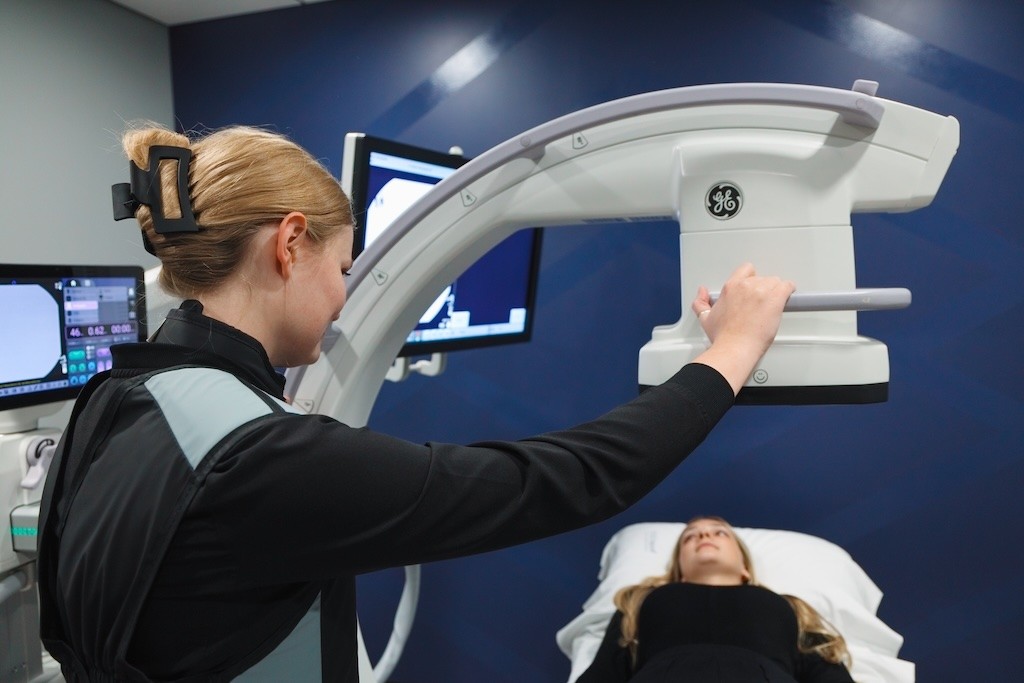
A fluoroscopy scan utilizes advanced technology to capture accurate, high-resolution imaging of bones, muscles, joints, and solid organs. Utilizing C-Arm imaging equipment, an x-ray beam is transmitted through the body part that is being examined, and graphically illustrates location, movement, and functionality of internal bodily structures. Fluoroscopic imaging provides the equivalent of real-time videography in an x-ray format.
What to Expect
01
Check In & Screening
Arrive 15 minutes early for registration. Before your procedure, our team reviews your imaging history, confirms pregnancy status if applicable, and documents any allergies or sensitivities to medications, contrast dyes, latex, or iodine.
02
The Procedure
You'll be positioned on the X-ray table, with jewelry and interfering clothing removed. The C-shaped X-ray machine enables imaging from multiple angles, and an IV line may be placed if contrast dye is needed. The procedure is non-painful, with local anesthesia available as needed.
03
Results & Follow-Up
A board-certified radiologist interprets your images and delivers a written diagnostic assessment to your referring physician within 24–48 hours, available on the patient portal.
How to Prepare
Before scheduling, our team reviews your imaging history for cumulative radiation exposure and recent barium procedures, confirms pregnancy status if applicable, and documents any allergies or sensitivities to medications, contrast dyes, latex, or iodine. Food and drink restrictions are individualized based on your specific exam.
Conditions Detected
Fluoroscopy uses C-Arm imaging to capture high-resolution, real-time video-like X-ray images of bones, muscles, joints, and organs, illustrating the location, movement, and functionality of internal structures. It serves both diagnostic and therapeutic purposes, particularly for image-guided interventional procedures and therapeutic injections.
FAQ
Is fluoroscopy safe?
Fluoroscopy uses varying amounts of radiation based on the medically appropriate level needed for your specific assessment or procedure. The clinical diagnostic benefits outweigh the radiation risks involved.
What happens during a joint procedure?
Joint procedures performed under fluoroscopic guidance may involve fluid aspiration and contrast injection to help visualize the joint. Local anesthesia is available if needed, and the procedure itself is non-painful.
How long does a fluoroscopy procedure take?
Duration varies depending on the type of exam or procedure. Our staff will provide a time estimate specific to your appointment.
What preparation is required?
Preparation depends on the specific exam. Our team reviews your imaging history, confirms pregnancy status if applicable, and checks for any allergies to medications, contrast dyes, latex, or iodine before your appointment. Food and drink restrictions are individualized based on your exam type.